
Forest Stand Improvement
Forest stand improvement (FSI) is a common forest management practice used to restore health, species composition and openness in a forest. The FSI practices put into use depend on land managers’ defined short- and long-term management goals and objectives (e.g., forest community establishment, promotion of natural regeneration, structure diversification, etc.).
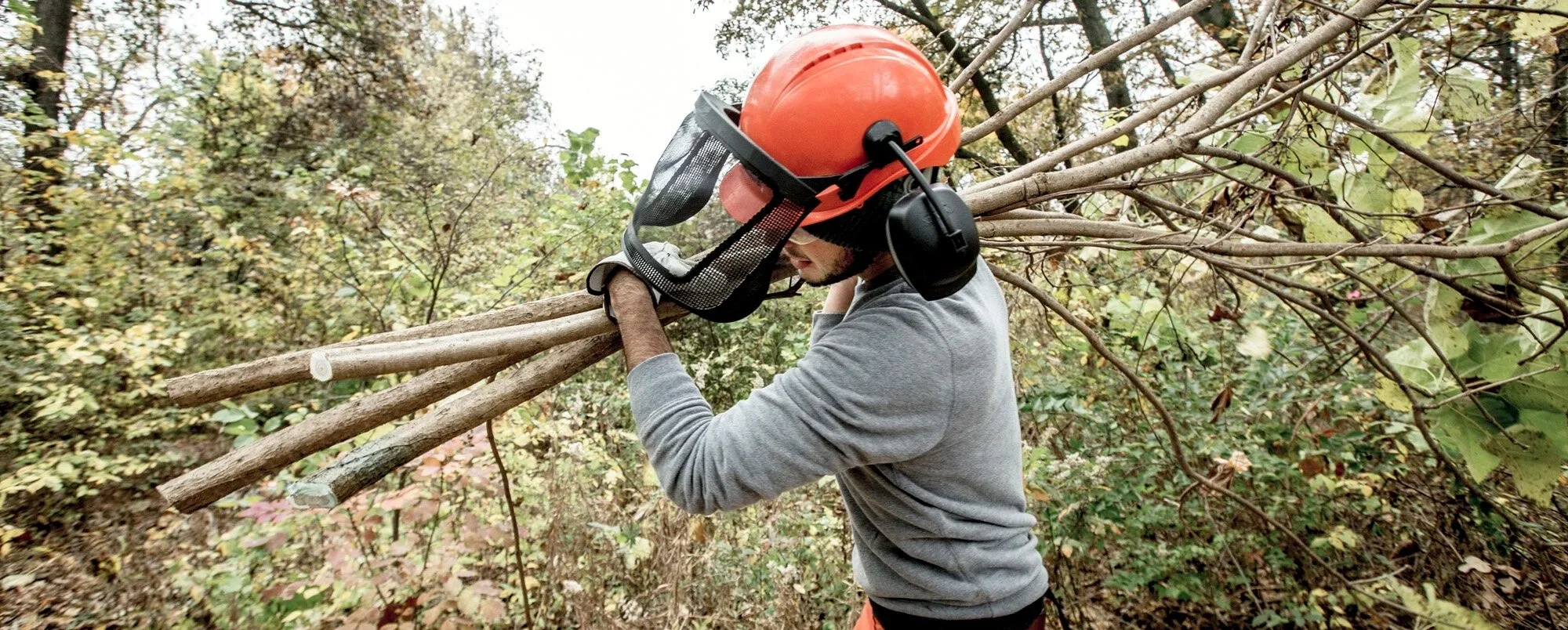
In urban forests like those in Forest Park, FSI typically includes cutting and removing less desirable tree species or poorly formed trees to concentrate growth and encourage health and longevity in the remaining trees.
The main forest types in the St. Louis region are mesic and dry-mesic oak–hickory forests. Desirable trees, primarily oak and hickory species, have highly nutritious acorns and nuts that are valuable food sources for many species of birds and mammals. Many insects and invertebrates eat the leaves, twigs and sap.
Trunk cavities also provide den, nest and roost sites for raccoons, squirrels, woodpeckers, owls and other wildlife. Using FSI, land managers may leave standing dead trees (i.e., snags) and den trees to support wildlife populations.
Periodic fires and droughts historically contributed to open, oak-dominated forests and woodlands in Missouri. But fire suppression, urban development and other human-related activity have changed this. Within a few decades, fire suppression alone can result in overstocked canopies, decreasing sunlight that reaches the forest floor. Because oak seedlings require ample sunlight, their numbers dwindle while less desirable species—including maples, elms, ashes and many non-native species—thrive.
This modern shift is evident in Forest Park’s Nature Reserve. Forest Park Forever’s Land Management team uses prescribed burns and FSI practices to increase the amount of light that reaches the understory and ground. They also plant hundreds of oak and other native saplings each year to support strong and healthy woodlands.
For more information about managing urban forests, read “Advancing management of urban forested natural areas: toward an urban silviculture?”