
Forest Park’s Nature Reserve
Experiencing the beauty and serenity of nature is one of many reasons Forest Park receives 15.5 million visits each year. The Forest Park Master Plan adopted in 1995 includes restoring and maintaining the “Nature Reserve,” a corridor of natural areas that provide habitats for thousands of species of flora and fauna and recreational and educational opportunities for human visitors.
Where is the Nature Reserve?
The Nature Reserve isn’t one contiguous stretch of land but 172 acres of forests, woodlands, savannas, prairies, wetlands and 3.35 miles of waterways spread throughout Forest Park’s 1,300 total acres. The Nature Reserve provides beneficial ecosystem services, including rainwater retention and filtration, carbon sequestration, plant pollination and erosion control. It also comprises terrestrial and aquatic habitats that support at least*:
751+ plant species
580+ pollinator species (e.g., bees, butterflies and moths)
1,500+ other insect species
140 spider species
260+ fungus species
200+ bird species
22 amphibian and reptile species
Several mammal species, including muskrats, American mink, red fox, white-tailed deer and coyote
*2021–23 Forest Park Forever data
Land Management Practices Used in Forest Park
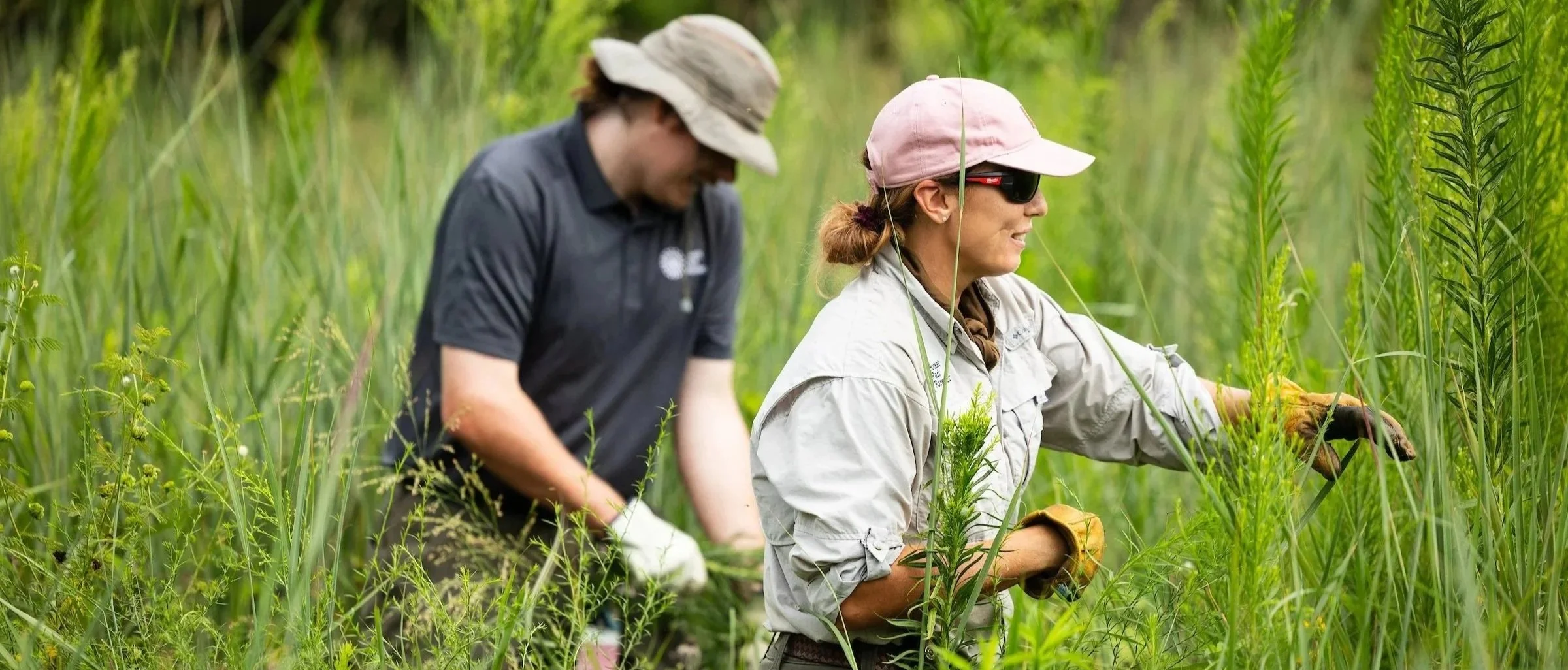
Forest Park Forever and the City of St. Louis Department of Parks, Recreation, and Forestry aim to increase biodiversity, ecological health and function, aesthetic beauty and recreational and educational opportunities in the Nature Reserve and throughout the Park. To achieve this, we use natural management methods (e.g., prescribed burns and forest stand improvement) and incorporate adaptive, integrated pest management approaches (e.g., mowing and applying herbicides).
Notes on Wildlife
For their safety and ours, it is essential that visitors avoid behaviors that encourage human–wildlife interactions.
If you encounter a wild animal, do not approach and do not feed. This only encourages unsafe human contact.
Report injured, sick or dangerous wildlife to the Citizen’s Service Bureau or contact a park ranger at 314.289.5350. Animal Care & Control will respond to a report of wildlife that is injured or poses a safety or health issue, but they will not respond to reports of nuisance wildlife.
Do not try to capture or “adopt” an animal, even one that appears young or injured. It’s illegal and does more harm than good.
Find more information on how the City of St. Louis handles wildlife issues and additional organizations who may be able to offer guidance.
The Missouri Department of Conservation is a great resource for learning to live with the wildlife who share our habitats.
Notes on Insects
Chiggers, ticks, wasps, yellow jackets and other biting and stinging insects are present in Forest Park. Many thrive in the heat and are very active during the warmer months of the year.
Bug spray can be a deterrent, but it is not a solution. Wearing long sleeves and pants tucked into socks offers the best protection.