
Controlled Burn: Visitor Alert
Updated on October 15, at 1:00 p.m.
Prescribed burn season begins in Forest Park
Weather permitting, it is the season for prescribed burning in Forest Park through the remainder of 2026 and into April 2027.
The window for safely and productively conducting burns in our region runs from mid-October to mid-April. Controlled burns are an essential management tool for Missouri's natural habitats. Burning enables fine-tuned maintenance of large areas and helps us reduce chemicals used to achieve our overall management goals.
With support from the Missouri Department of Conservation and in partnership with the City of St. Louis, Forest Park Forever is happy to report over a decade of successful prescribed burns. Data collected the last 16 years indicates, the ability to repeatedly and consistently burn in the Forest Park Nature Reserve directly correlates to the habitat’s diversity and overall health. Each time we complete a prescribed burn we continue to support and progress the communities in the Park.
This page will be updated when conditions are favorable for burning in Forest Park . Notice may be less than 24 hours in advance due to strict parameters around weather conditions.
Recap: Prescribed burns during the 2025-26 season
Fire enables fine-tuned maintenance and helps us reduce chemicals used to achieve our overall goals to manage the Nature Reserve. Working in partnership with the City of St. Louis, Forest Park Forever used fire to support and progress biodiversity across 12.6 combined acres in the Forest Park Nature Reserve this season. Our team successfully burned 3.5 acres on Wildlife Island and 2.1 acres of the Langenberg Riparian Buffer near Langenberg Field on January 6 and skillfully managed 4.5 acres of Deer Lake Savanna and 2.5 acres of Successional Forest on February 18.
Nature shifted spring ephemerals into full seasonal development before mid-April, and our team was only able to complete 50% of the permitted acreage. Spring came early! The remaining prescription sites along Kingshighway Blvd. require unwavering south- or east-facing winds, which did not align with other weather prescription attributes. Our management goals include mitigating harm to active plants, and our team didn’t want to risk releasing Nitrogen at such a pivotal moment. So, we will look to the 2026-2027 burn season to fulfill those prescriptions.
Our next steps begin as soon as the ash settles. Species succession and progression within Forest Park's Nature Reserve depend highly on seed introduction. Prescribed burning enhances the success of our conservancy's natural and supplemented seeding efforts. Selected sites received some supplemental seed mix this season to establish a healthier, more sustainable progression of Park habitat.
In spring, the bright green leaves of invasive species like wintercreeper, Japanese honeysuckle, and garlic mustard are easy to see, with few to no leaves packed together. So, staff and volunteers diligently hand-pull the aggressive species throughout the burnt site.
Recap: Prescribed burns during the 2024-25 season
Weather conditions were challenging for land managers across Missouri during the 2024-25 season. Thankfully, our team was still able to complete successful burns in Forest Park’s Nature Reserve.
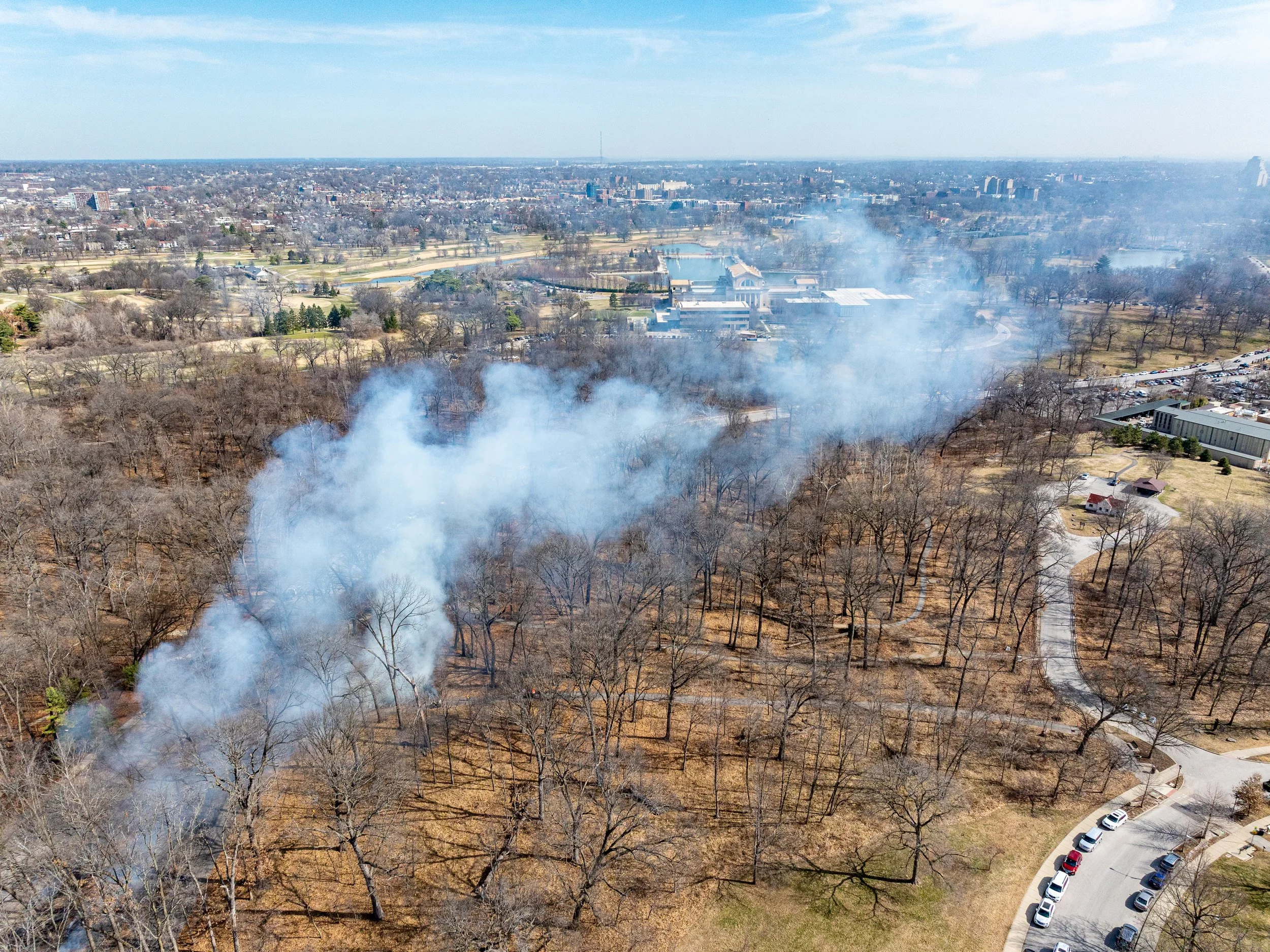
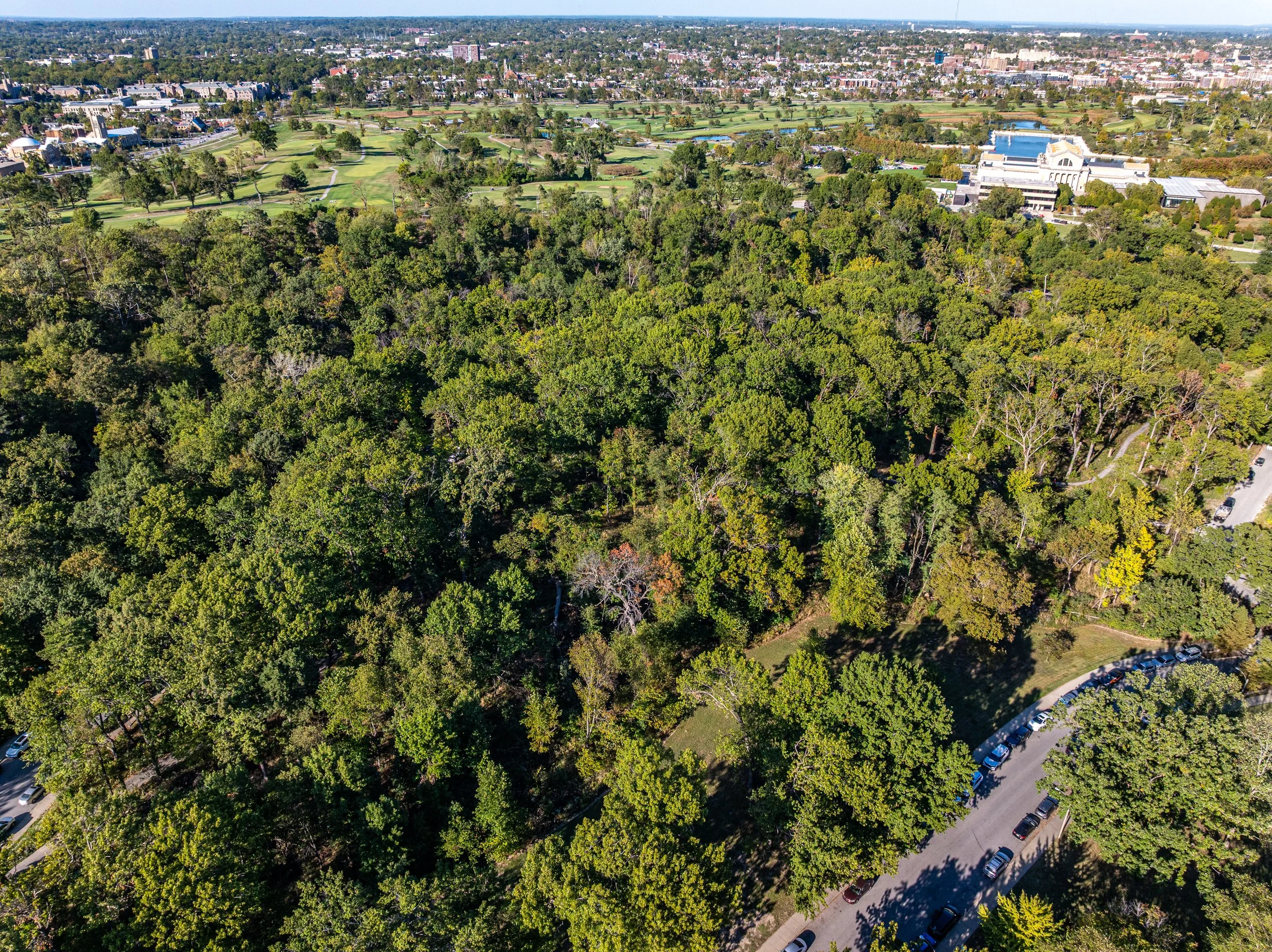
Working in partnership with the City of St. Louis, Forest Park Forever burned approximately 17.3 combined acres of forest, savanna and prairie across two days in March 2025. Conditions looked promising for a burn on February 28, but warm temperatures, very low humidity, and stronger winds increased the risk. Safety is our top priority, so we paused our schedule until nature was ready. March 10 was the first opportunity for prescribed burning in Forest Park. The team controlled fires in 12.7 combined acres in Hidden Creek Savanna, Deer Lake Savanna and sections of Kennedy Forest. Two days later, the team used fire to manage approximately 4.5 acres of Kennedy Forest and Kennedy Forest Boardwalk on March 12.
The images above show a prescribed burn happening in Kennedy Forest, left, during the winter and the same area with a full tree canopy in summer, right.
Recap: Prescribed burns during the 2023-24 season
Working in partnership with the city of St. Louis, Forest Park Forever burned approximately 43.6 combined acres of forest, savanna and prairie across four days in the Park. The team successfully controlled burns in Kennedy Forest Savanna (8.2 acres) and sections of Kennedy Forest Boardwalk (7.9 acres), Deer Lake Savanna (8.3 acres), areas of Successional Forest (6.7 acres), Wildlife Island (3.5 acres), the prairie surrounding the MDC Fish Hatcheries (3.6 acres), Round Lake Vista (2.8 acres) and the woodland west of Steinberg Rink (2.6 acres). With each successful burn, our Park experts grows closer to bringing all of the Forest Park Nature Reserve into a full stewardship regime.
Our team is thrilled to have burned several sections of Forest Park with spring ephemeral wildflowers! These early spring blooms are crucially important plants for spring insects and wildlife, and it is ideal to burn sites with spring ephemerals in the fall/early winter to avoid negative impacts on their natural cycles. Though the time-window is small, and these areas are challenging to complete, however, we still accomplished 77% of spring ephemeral sites and are delighted by the increased vigor and density of early spring blooms in these areas of the Park.


Three images showing the progression in a section of Deer Lake Savanna burning, burnt and growing after the 2023-24 burn season, left-to-right.
Recap: Prescribed Burns during the 2022-23 season


(ABOVE) Controlled burn conducted in Klein Prairie on Feb. 6, 2023
Working in partnership with the city of St. Louis, Forest Park Forever burnt 27.3 combined acres of forest, savanna and prairie across three days in the Park. The team successfully controlled burns in Deer Lake Savanna South (5.1 acres), Hidden Creek Savanna (2.9 acres), Kennedy Forest (West & NW), 8.5 acres), Klein Prairie (3.7 acres), Pollinator Garden (0.3 acres), Riparian Buffers, Langenberg Field and Moore Meadow (4.5 acres).
Our next steps start as soon as the ash settles. The bright green leaves of invasive species like wintercreeper, Japanese honeysuckle and garlic mustard are easy to see, with few to no leaves packed on top of them. So, staff and volunteers are already diligently hand-pulling the exposed invasive species in the newly burned sites.
As natural habitat islands within an urban sea, species succession and progression within Forest Park's Nature Reserve is highly dependent on seed introduction. All burned sites have received some supplemental seed mix this season to establish a healthier, more sustainable natural progression of Park habitat.
Recap: Prescribed Burns during the 2021-22 season

Controlled burns were conducted in Deer Lake Savanna, Hatcheries Prairie and Round Lake Vista on Jan. 31.
In partnership with the City of St. Louis, Forest Park Forever conducted burns on 31 acres across four burn days during the 2021-2022 season in Forest Park. The team performed successful, safe and complete burns in Kennedy Forest (around the boardwalks) and Kennedy Savanna (near Skinker), Deer Lake Savanna, Hatcheries Prairie and Round Lake Vista, completing all highest priority units as well as two lower priority units. The total 31 acres burned were the highest total acreage in a single season since the practice was introduced to the Park a decade ago.