
Enjoy Changing Colors—and More Trees—in Forest Park This Fall
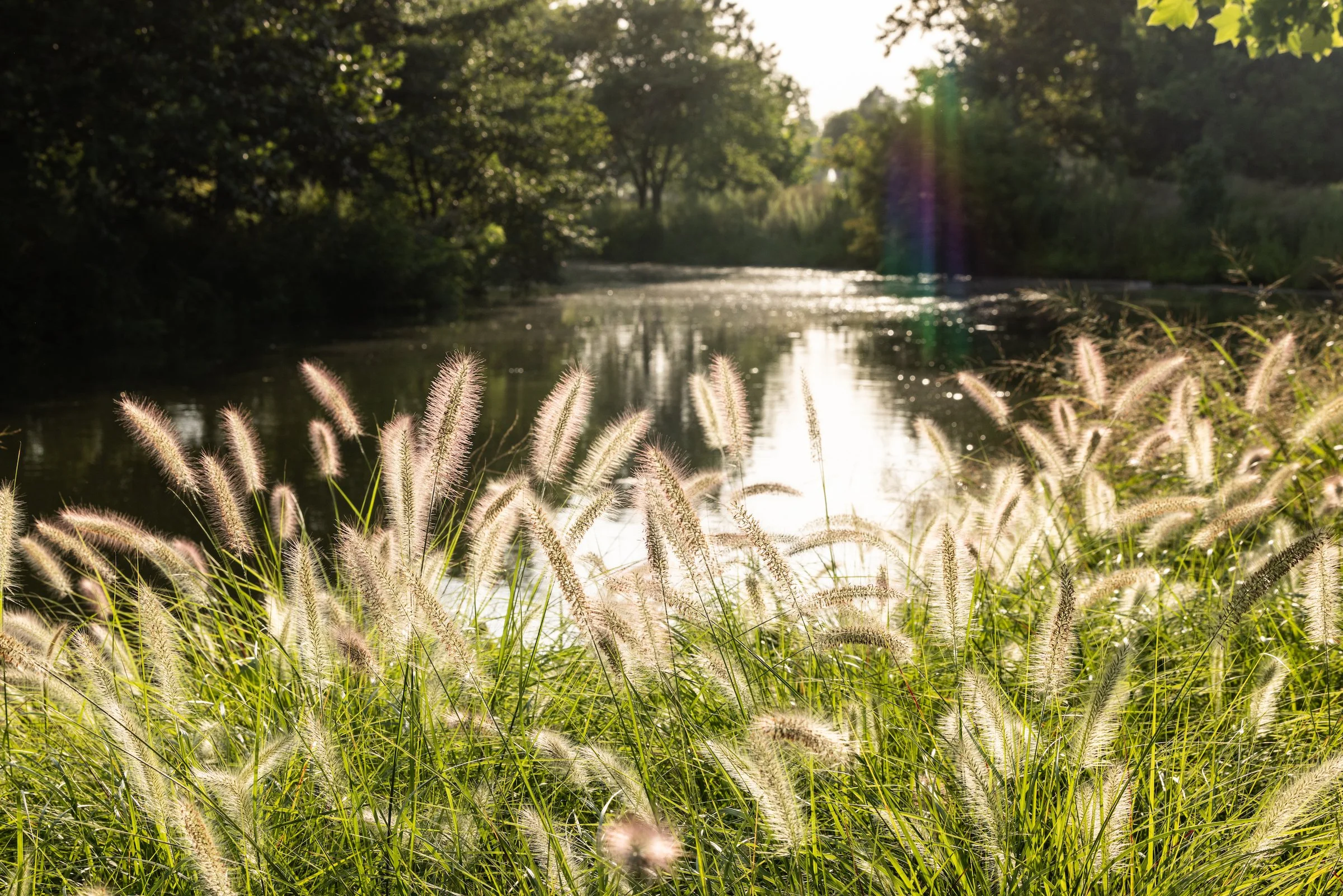
Autumn has arrived in the northern hemisphere, and while the suddenly cooler temperatures say fall, the still-verdant vegetation says summer. Those who live for leaf peeping will have to wait a while longer, according to Forest Park Forever’s Conservation Arborist Joe Enger. “The timeline varies considerably based on species. Black gums, tulip trees, sycamores and cottonwoods throughout the Park are already beginning to express some change. Of these, I find black gums to be by far the most impressive,” he says. Enger and our nonprofit’s other expert arborists expect fall color in Forest Park to peak in mid to late October.
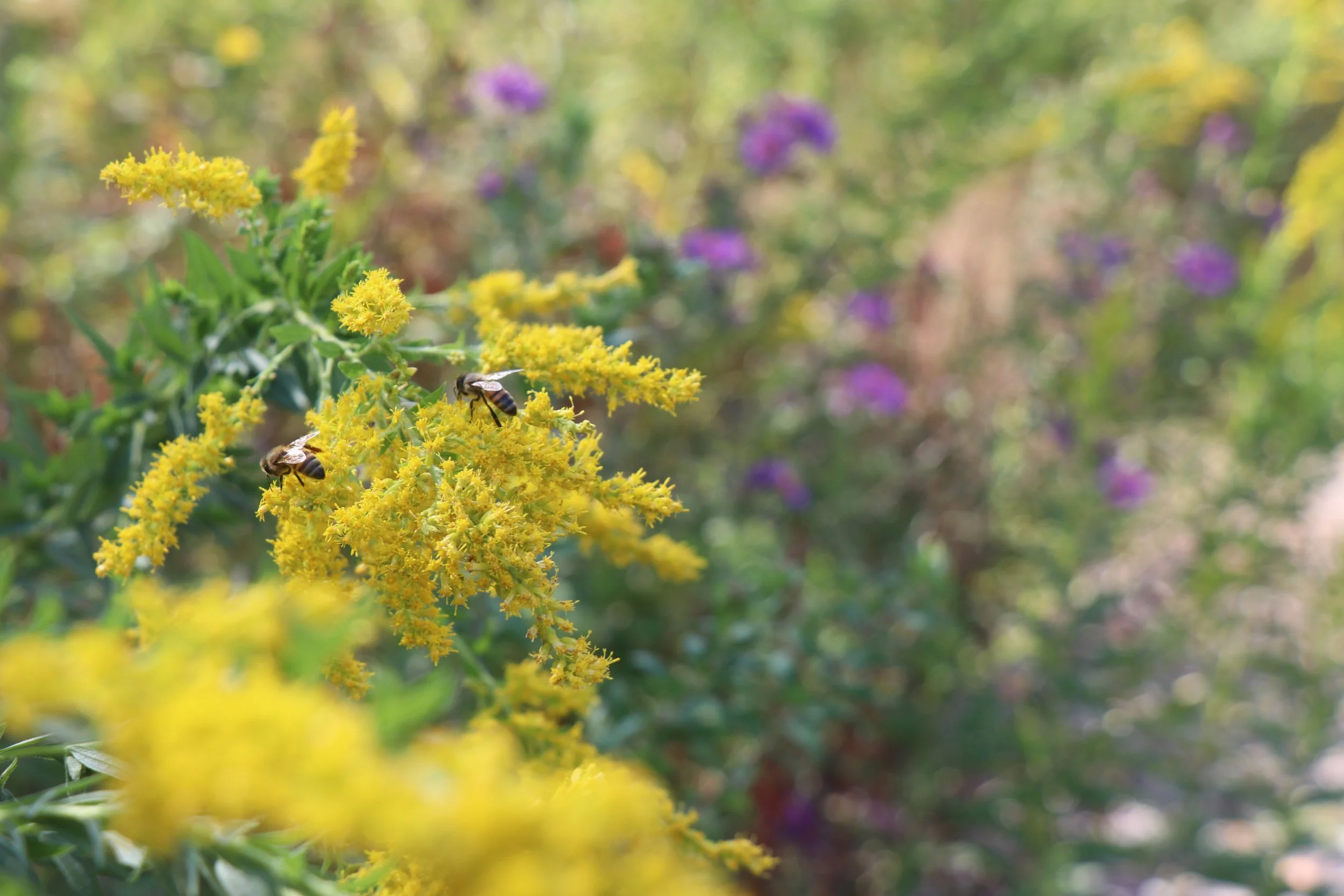
In the meantime, complementary goldenrods and asters and many other fall wildflowers are putting on colorful displays in the Anne O’C. Albrecht Nature Playscape and throughout the Nature Reserve areas of the Park.
Lingering Tornado Effects and Ongoing Recovery Efforts
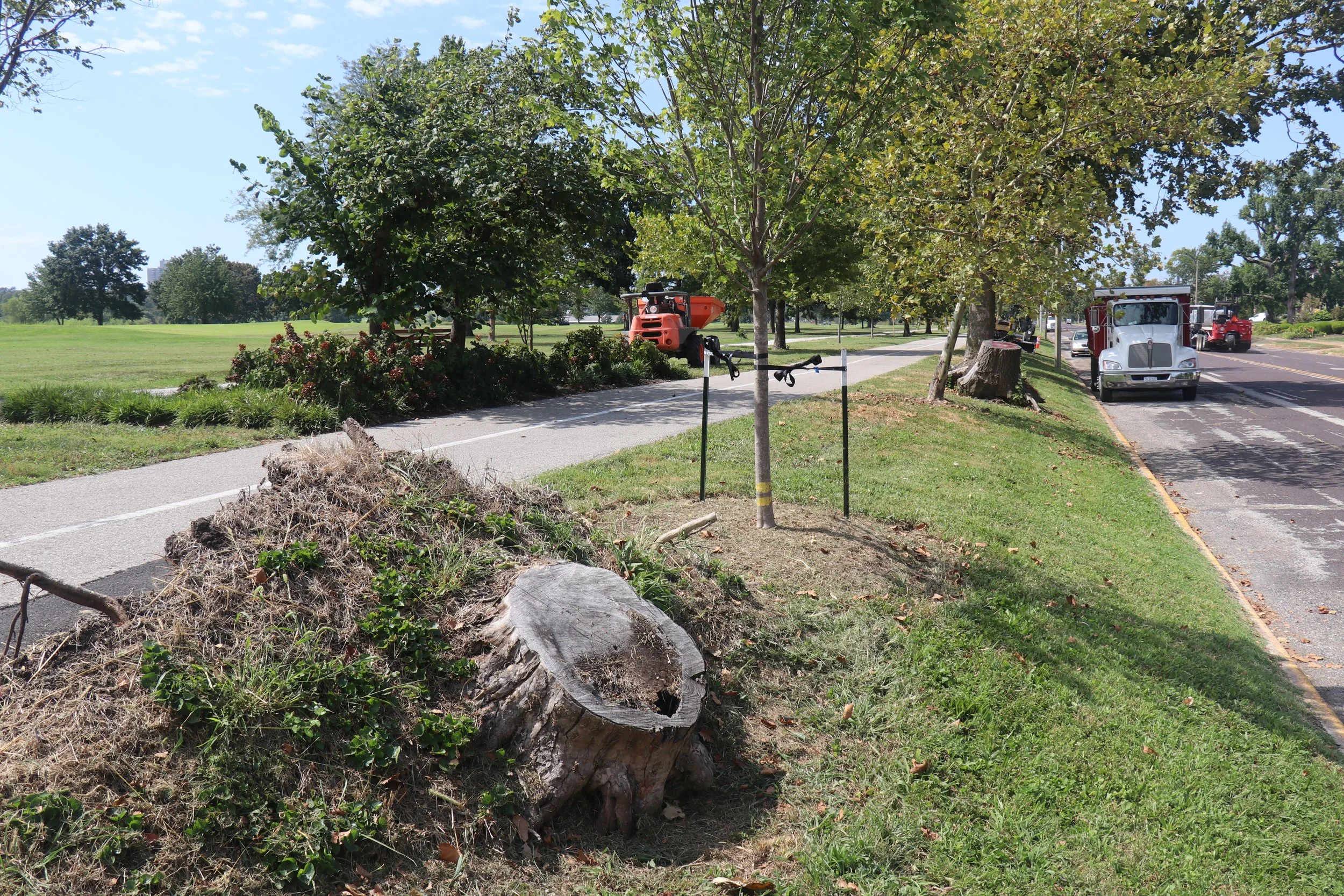
It’s impossible to talk about Forest Park’s trees without considering the effects of the May 16, 2025, tornado. As St. Louis continues to recover, crews are systematically removing over a thousand tree stumps that remain in the Park, mostly in the hard-hit northern and eastern sections. We expect this physically and emotionally laborious process to be completed by the end of this year.
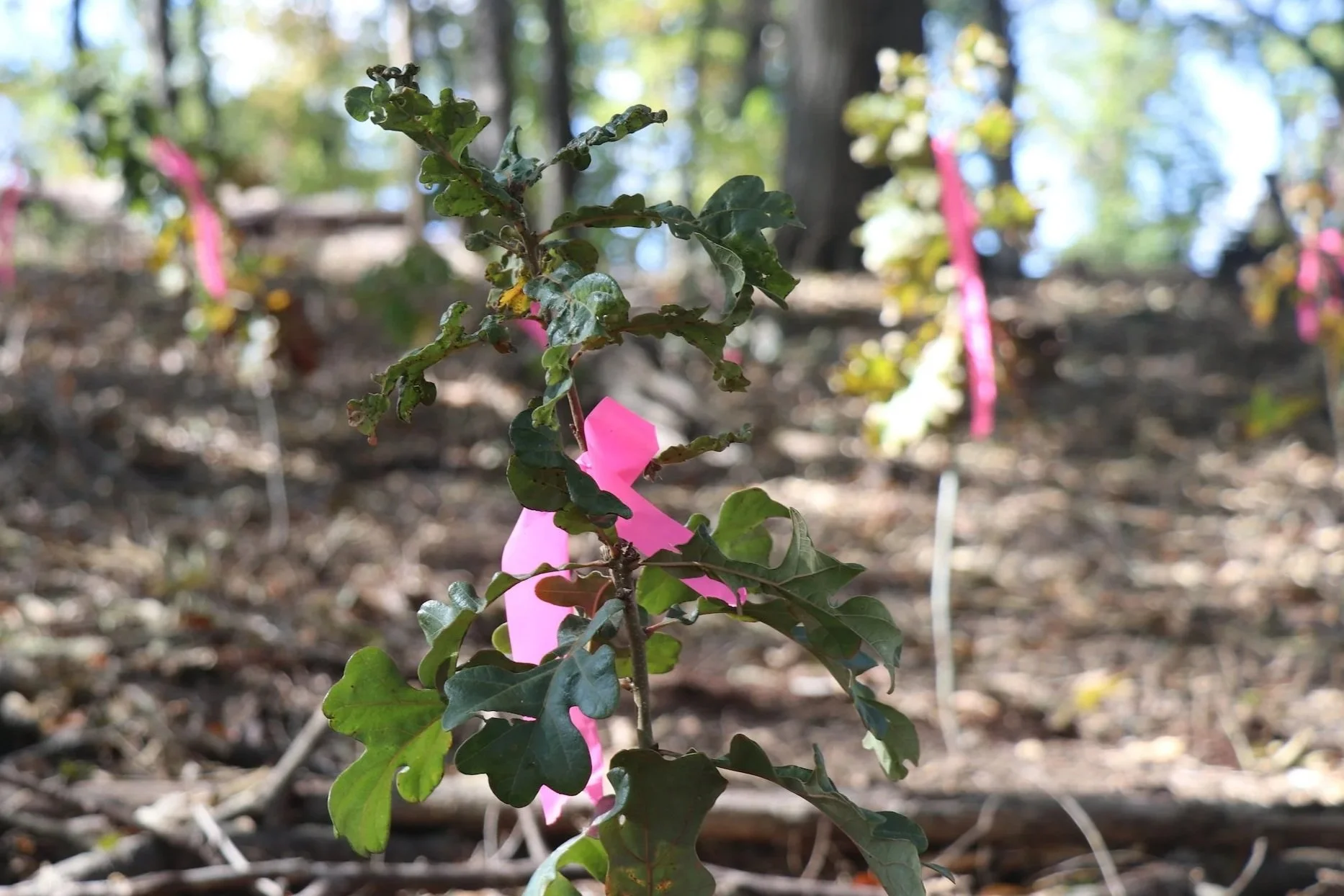
As the cleanup work continues, our Land Management team also is working to rebuild, thinking ahead to future tree cover and color. More than 5,000 trees were destroyed by the tornado. To begin the process of replacing what was lost and restore the tree canopy, we’ve planted over a thousand trees over the past year. And now that it’s prime time for planting, we’re preparing to place another 600 trees this season.
“We look forward to planting these new trees, which include more than 300 oak species,” Enter says. “While they might not look very impressive at first, they will live in the Park for decades—or even centuries—providing beauty and shade for future generations.”

The Park Continues to Provide Critical Habitat
The trees in Forest Park are beloved by visitors and provide food and essential resting spots for migratory birds. St. Louis is in the Mississippi Flyway, a crucial route for hundreds of migrating species.
“When canopy cover is lost, as happened in the Park last year, there are fewer safe places for birds to stop and refuel, which makes their migration more difficult,” Enger says. “The damage to the canopy can’t be undone in a single year, or even several years, because trees require decades of growth to provide the same level of habitat provided by the mature trees lost in the storm. But through intensive replanting today, we can begin to recreate the lost stopover habitat. As Enger points out, we were fortunate that “many mature trees survived the tornado, so birds that have become accustomed to stopping in the Park will still find refuge here.”
Forever our Favorite Place to Enjoy Fall
As the nonprofit conservancy that maintains Forest Park in partnership with the City of St. Louis, Forest Park Forever employs experts in land management, ecology, conservation, park operations, community engagement, education and visitor services. We’re now using our expertise to integrate long-term tornado recovery into our annual plans and the master plan for Forest Park.
There’s still so much work to be done and many ways you can help!
Get Park news in your inbox by signing up for our biweekly e-newsletter.
Keep up with our tornado recovery efforts.
Become a member or renew your membership.
Make a one-time gift.
Explore other ways to support our work.
Apply to become a volunteer.
Follow us on Facebook, Instagram, X, YouTube and LinkedIn and share your love for Forest Park and #ForestParkForever on social media!